
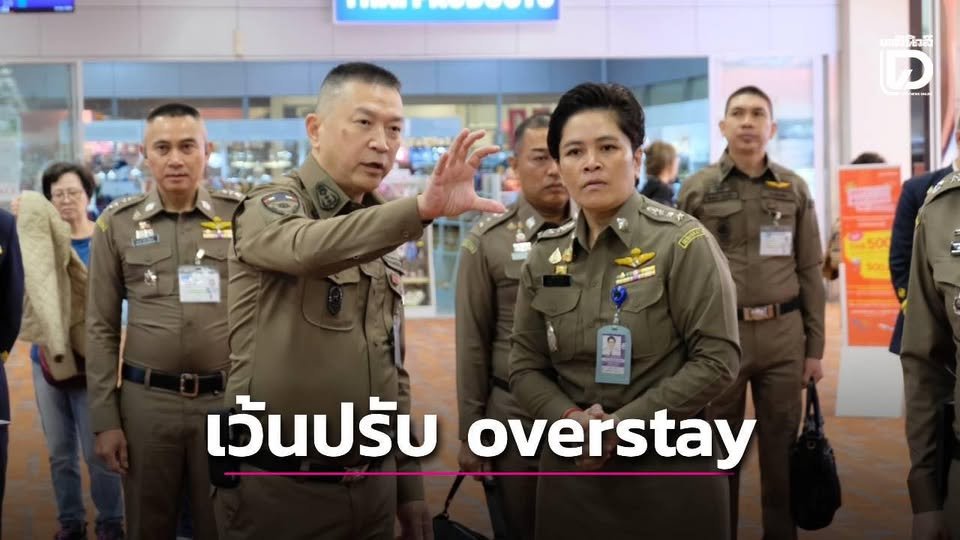
The Thailand overstay fine waiver – From 20 November to 31 December 2025, the Immigration Bureau will not charge overstay fines to foreign tourists who cannot leave Thailand because of heavy flooding in eight southern provinces. This is because the situation is force majeure, or something people cannot control. Immigration officers will still check all travellers to make sure everyone is safe.
About the Waiver
- The Immigration Bureau will not collect the 500-baht-per-day overstay fine from foreigners who could not leave Thailand on time because of strong flooding.
- This rule applies only when the delay is caused by force majeure, such as natural flooding that makes travel unsafe or impossible.
- It covers cases from 20 November to 31 December 2025.
Affected Locations
- Eight provinces in the South are included: Songkhla, Nakhon Si Thammarat, Phatthalung, Trang, Satun, Pattani, Yala, and Narathiwat.
- Hat Yai in Songkhla is one of the most affected places. Many roads are blocked, and tourists cannot reach airports or border points.
Authorities Involved
- The announcement was made on 28 November 2025 by Pol. Maj. Gen. Cherngron Rimpadee, the spokesperson.
- The order came from Pol. Lt. Gen. Parnumas Boonyaluck, the Immigration Commissioner.
- The waiver is allowed under Section 54 of the 1979 Immigration Act.
- This law lets immigration cancel penalties when the overstay happens because of events people cannot control.
Conditions and Screening
- This waiver is only for foreigners who wanted to leave but could not because of the floods.
- Immigration officers will still check passports, travel history, and security information.
- The rule does not change how officers handle people who overstay on purpose or many times.
- Travellers may need to show proof, such as cancelled flights or closed roads.
Operational Measures
- Immigration is checking offices in the South that were damaged by the flood.
- Repairs are being done quickly so the offices can work normally again.
- The main goals are safety, good service, and fair treatment for visitors.
Thailand’s Immigration Bureau has announced a temporary rule to help foreign tourists who are stuck in the South because of very heavy flooding. Many areas in eight southern provinces have strong rain and rising water. Because of this, many roads are closed, and people cannot travel safely. Some tourists cannot go to airports or border checkpoints to leave Thailand before their permission to stay ends.
Normally, if someone stays even one extra day, they must pay a fine of 500 baht per day. But in this situation, many tourists are not able to leave. It is not their fault. Because of this, the Immigration Bureau decided to waive, or remove, the overstay fine for people affected by the floods.
On 28 November 2025, the Immigration Bureau spokesperson, Pol. Maj. Gen. Cherngron Rimpadee, explained the situation. He said that the Immigration Commissioner, Pol. Lt. Gen. Parnumas Boonyaluck, had signed an urgent order on 27 November 2025. This order tells all immigration checkpoints in Thailand to waive the overstay fines for travellers stuck in the eight southern provinces: Songkhla, Nakhon Si Thammarat, Phatthalung, Trang, Satun, Pattani, Yala, and Narathiwat.
These provinces have had many days of strong rain. The floods came quickly and caused big problems for transportation. Many buses could not run. Roads were underwater. Some bridges were damaged. This made it impossible for some travellers to reach airports, bus stations, or border checkpoints. Because of this, they could not leave Thailand on time.
The rule is based on Section 54 of Thailand’s Immigration Act. This law allows immigration to cancel the overstay fine when the situation is beyond a traveller’s control. A natural disaster like a flood is one example. The law exists to help people during emergencies, and this flooding is clearly an emergency.
Thailand overstay fine waiver applies to the period from 20 November to 31 December 2025. If a traveller overstays during this time because the flood stopped them from travelling, they will not need to pay the fine. However, they must show they really planned to leave and were stopped by the flooding. Immigration wants to help, but they also want to be sure the rule is not misused.
Even though fines are waived, immigration officers will still do the usual security checks. They will look at travel history, check the passport, and review background information. The waiver does not mean immigration is relaxing all rules. It only means that people will not pay the fine if the flood caused their delay. Immigration still needs to make sure everyone entering or leaving Thailand follows the law.
Immigration officers will also check the local immigration offices in the affected provinces. Some of these offices were damaged by the floodwaters. The Bureau is working quickly to repair them so that services can return to normal. This includes visa extensions, reporting, and other important functions. Even in emergencies, immigration needs to continue its work and help the public.
The main idea of this decision is compassion. Thailand understands that natural disasters can suddenly change travel plans. The government wants tourists to feel safe and supported. By using Section 54, immigration shows that they are fair and understanding while still protecting national security.
At the same time, the government wants to remind people that this waiver is only for emergency cases. It is not a sign that immigration rules are becoming more relaxed overall. In recent years, immigration in Thailand has become more careful, especially with people who stay long periods using visa-free entries or border runs. Thailand welcomes tourists and long-stay visitors, but the rules must be respected.
In short:
Thailand overstay fine waiver helps people stuck because of the flood. It does not change long-term immigration policy. People who follow the rules will receive support, and Thailand wants to treat all travellers fairly—even in a difficult time like this.
For travellers who use visa runs, this announcement should not be seen as a chance to extend stays easily. The flooding is a special and serious event. The waiver is only because many roads are blocked, and tourists cannot move. Immigration officers will still check people’s travel records, and frequent border-run patterns will still be noticed.
If someone stays in Thailand for many months each year using only visa exemptions, they should think about getting the right long-stay visa for their situation. Thailand is kind during emergencies, but it is strict about long-term patterns. The flood waiver shows compassion, but it is not a signal of weaker enforcement.
Thai Free Visa: Feel free to reach out to us anytime. We are here to help whenever you need.