
The Impact of Global Conflict on Air Travel and Immigration
Thailand Overstay Fine Relief Measures During the Middle East Airspace Crisis: When global conflict starts, air travel can change very quickly. Flights that normally run every day may suddenly stop. This creates a domino effect in the aviation industry and can turn normal travel into a serious legal and travel problem for passengers. We can see this in recent conflicts, such as the war in Ukraine and rising tensions in the Middle East.
When countries close their airspace because of war, many travelers are affected. For example, after Ukrainian airspace closed and Russian aircraft were banned in early 2022 [1], international flights to and from Russia dropped by more than 80% in just a few weeks [2]. Many travelers could not return home. It was estimated that more than 100,000 Russian tourists were stranded in places such as Thailand, Egypt, and the Caribbean [3]. At the same time, airlines had to avoid Russian airspace, so some flights between Europe and Asia became much longer. These routes could add up to 3 extra hours of flying time, which increased fuel costs and raised ticket prices by about 20% to 50% [4].
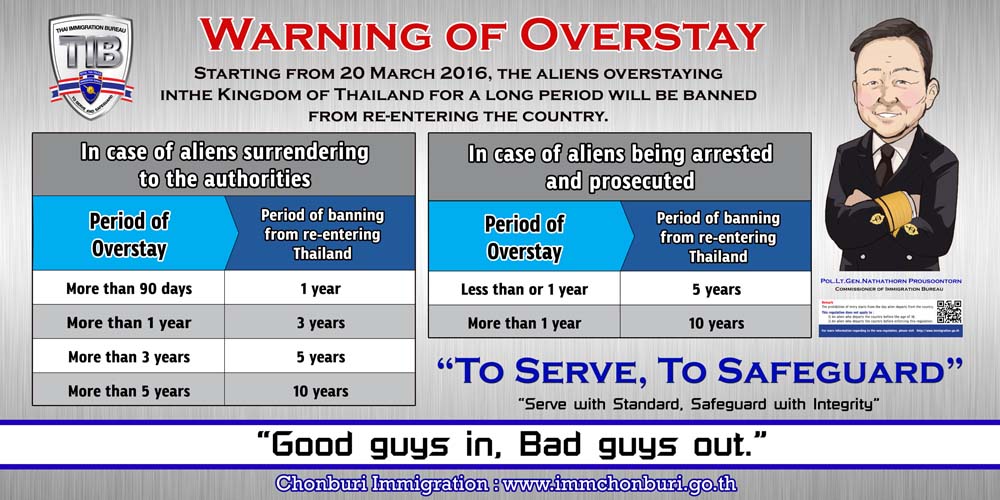
When flights are cancelled, immigration problems can begin. Many tourists travel on visas that allow them to stay for only 30 or 90 days. If they cannot leave because flights stop, they may accidentally stay longer than their visa allows. For example, during the conflict in Sudan in 2023–2024, many foreign nationals could not reach airports such as Port Sudan or Khartoum [5]. In normal situations, overstaying a visa can lead to fines between USD 50 and USD 1,000, and in some countries, it may also cause a ban on returning for 5 to 10 years.
Conflicts can also affect important transit airports. Large hubs, such as Istanbul or Dubai normally serve many connecting passengers who are only passing through. If flights are disrupted, these travelers may become stuck. They are not officially admitted into the country, but they also cannot continue their journey. This creates a difficult legal situation.
In such emergencies, immigration law often becomes more flexible. Governments may decide to give special help to travelers who cannot leave. For example, during the Ukraine crisis, countries, such as Ireland and Poland removed visa requirements for Ukrainians [6]. The United States also gave Temporary Protected Status to about 30,000 Ukrainians who were already in the country [7]. This allowed them to stay legally during the crisis.
At the same time, embassies and consulates must help many people quickly. During large evacuations, such as the fall of Kabul in 2021, requests for emergency travel documents increased by about 1,000% [8]. These documents are important because without them travelers cannot cross borders or receive government assistance such as shelter or food. In these situations, immigration rules are not only about law but also about helping people survive during a crisis.
Middle East Airspace Closures
Tensions in the Middle East started on 28 February 2026. This conflict caused many problems for world travel. Many countries closed their airspace, which stopped planes from flying. Between 28 February and 7 March 2026, a total of 584 flights were canceled or delayed. This affected 78,564 passengers worldwide [9]. Because of this, many people could not fly between Asia and Europe. In Thailand, 8 major airlines from the Middle East had to stop their flights. These airlines usually carry more than 10,000 passengers every day from Thailand.
Because planes were not flying, many tourists were stuck in Thailand. Their visas expired, and they could not leave. Normally, staying too long (overstaying) is a legal problem. Thailand usually charges a fine of 500 baht per day for overstaying. This fine can go up to 20,000 baht. However, Thai authorities decided to help. The Immigration Bureau and the Ministry of Tourism and Sports announced new rules for people whose stay ended on or after 28 February 2026.
Thailand Overstay Fine Relief: How the Relief Measures Work
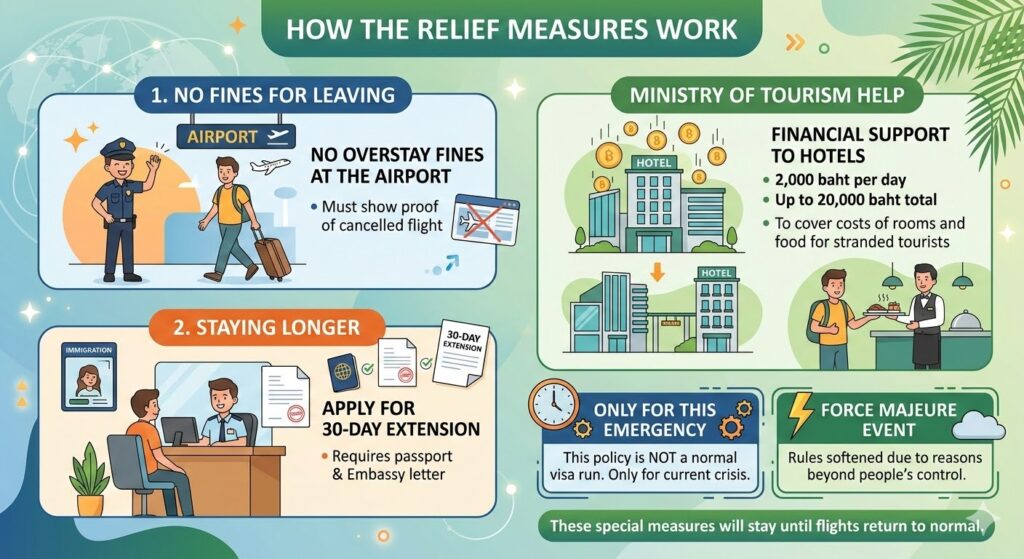
The government is helping in two main ways:
No Fines for Leaving: If you go to the airport to fly home, the police will not make you pay the overstay fine. You must show proof that your flight was canceled.
Staying Longer: If you cannot find a flight yet, you can ask for a 30-day extension. You will need to go to an immigration office with your passport and a letter from your embassy.
The Ministry of Tourism is also helping. They can give 2000 baht per day (up to 20,000 baht total) to hotels to help pay for the rooms and food of stranded tourists [10].
This policy is only for this emergency. It is not a normal green corridor. Thailand is softening the rules because this is a force majeure event, something that people cannot control. These special measures will stay until flights return to normal.
Why Thailand Introduced Emergency Overstay Relief
The immediate trigger was the conflict in the Middle East and the resulting disruption to air travel. The situation from late February 2026 onward caused flight cancellations and broader logistical problems for travelers moving through the region. Thai authorities reported canceled flights affecting airports such as Phuket, Krabi, and Chiang Mai, while wider disruption also affected international connections. Multiple reports indicated that foreign travelers were at risk of being stranded in Thailand because they could not depart as scheduled.
The key legal and humanitarian issue is that some foreign visitors did not choose to stay in Thailand longer than their visa allowed. They could not leave because many flights were canceled and some airspace was closed due to the conflict. This made normal travel very difficult or impossible. Because of this situation, Thai immigration authorities introduced special relief measures to help reduce the problems faced by these travelers.
In simple terms, the policy follows an important idea: not all overstays are the same. Some people overstay because they break the rules on purpose. However, other travelers overstay because they cannot leave the country due to unexpected events, such as war or flight disruptions. The new measures recognize this difference and try to treat affected travelers fairly.
How the Overstay Fine Works Under the Emergency Measure
Thailand’s response divides affected travelers into two main groups [11].
(1) Travelers Who Want to Leave Thailand
If a foreign national’s permission to stay has already expired, but they now wish to depart the country, Thai immigration will waive the overstay comparison fine in the affected cases.
This is the most headline-worthy part of the policy. In simple terms, if someone became an overstayer because the war-related disruption prevented departure, and they are now leaving Thailand, authorities may let them exit without paying the normal overstay fine.
That is a major relief measure because it reduces the immediate financial penalty for people stuck in an emergency. It also makes the exit process more manageable for tourists who may already be facing extra hotel bills, rebooking costs, or expensive rerouted flights.
However, travelers should not misunderstand this. The waiver does not mean Thai immigration law has been suspended. It means the authorities are exercising a specific emergency accommodation for affected people whose overstay arose in connection with the disruption beginning 28 February 2026.
(2) Travelers Who Want to Stay Longer Temporarily
The second group is different. If a foreign national wants to remain in Thailand temporarily rather than leave immediately, the relief is more limited.
Where the original permission has already expired, officers must first proceed with the legal fine process, and only after that may they consider granting a temporary stay extension, up to 30 days at a time.
So the rule is not: everyone gets a free 30-day extension. Instead, the policy works in a different way. If a traveler is leaving Thailand, the authorities may waive the overstay fine. This means the person can depart without paying the usual penalty. However, if a traveler wants to stay longer in Thailand, they must ask for a temporary extension from immigration officers.
In this case, the normal immigration process may still apply. If the person’s permitted stay has already ended, they may still need to pay the overstay fine before applying for the extension. This difference is very important. Many travelers think that emergency relief means they can extend their stay for free, but the information from the authorities does not say that.
Who Benefits From the Thailand Overstay Fine Relief Policy?
The people who benefit most from this policy are real travelers who are stranded because of the Middle East crisis. These are foreign nationals who cannot leave Thailand because flights were canceled, airspace was closed, or travel routes were disrupted by the conflict.
In real life, this includes tourists who planned to fly home through Middle Eastern transit hubs. It also includes passengers whose direct or connecting flights were canceled and travelers who cannot find another flight in time. Some visitors may have their Thai permission to stay expire while they are still unable to leave the country. Others may only need a short emergency stay in Thailand until normal flight schedules return.
This policy is especially important for short-term visitors and tourists. It also helps people who have limited permission to stay in Thailand and those whose travel plans depended on transit routes through the Middle East. These travelers did not plan to stay longer, but the crisis made it impossible for them to leave as scheduled.
The measures also indirectly benefit Thailand’s tourism system. By reducing panic and providing legal clarity, authorities help avoid chaos at airports, immigration counters, hotels, and tourist assistance centers. The policy also protects Thailand’s international reputation. When travelers are stranded by war, a rigid and unsympathetic response can damage a country’s image. A measured humanitarian policy, by contrast, signals competence and goodwill.
Who Does Not Automatically Benefit?
Just because a person is on overstay does not mean they qualify. The emergency relief is tied to a specific cause: the conflict-related disruption from 28 February 2026 onward.
That means the policy is not obviously designed for:
- People who were already overstaying before the disruption,
- People who missed their departure for unrelated personal reasons,
- People trying to use the crisis as an excuse for ordinary immigration noncompliance,
- Travelers seeking to convert an emergency into a convenient long stay,
- People attempting to avoid standard immigration rules without genuine travel disruption.
This is why documentation matters so much. Authorities need to distinguish between someone truly stranded and someone simply trying to benefit from a temporary policy.
What Travelers Should Do Immediately
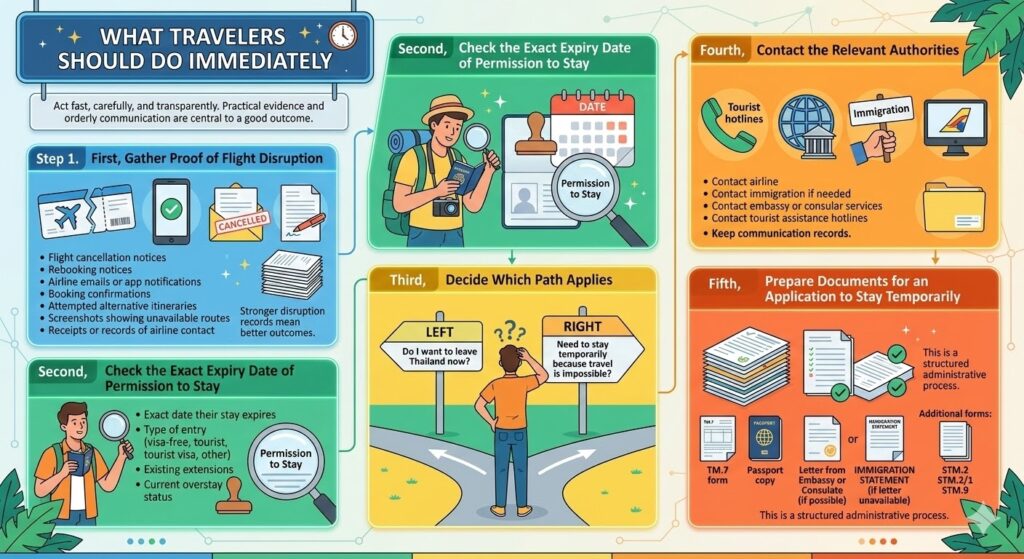
Anyone affected should act fast, carefully, and transparently. Practical evidence and orderly communication are central to a good outcome.
First, Gather Proof of Flight Disruption
Travelers should collect:
- Flight cancellation notices,
- Rebooking notices,
- Airline emails or app notifications,
- Booking confirmations,
- Attempted alternative itineraries,
- Screenshots showing unavailable routes,
- Receipts or records of airline contact.
Even if the Thai policy materials do not spell out every evidence type in detail, common sense says that the stronger the travel-disruption record, the better.
Second, Check the Exact Expiry Date of Permission to Stay
Many people casually talk about visa expiry, but what matters operationally is the person’s authorized stay period in Thailand. Travelers need to know:
- The exact date their stay expires,
- Whether they entered visa-free, on a tourist visa, or another category,
- Whether any extension already exists,
- Whether they are already in overstay.
That date determines whether they are still in status, at risk of overstay, or already overstaying.
Third, Decide Which Path Applies
The person must be clear about their goal:
- Do I want to leave Thailand now?
- Or do I need to stay temporarily because travel remains impossible?
Those two situations are treated differently under the policy.
Fourth, Contact the Relevant Authorities
There are help channels such as immigration and tourist assistance lines. In a crisis, travelers should use official channels and keep records of all communication. That includes:
- Contacting the airline,
- Contacting immigration if needed,
- Contacting embassy or consular services,
- Contacting tourist assistance hotlines if guidance is needed.
Fifth, Prepare Documents for an Application to Stay Temporarily
If the traveler needs to remain in Thailand, they should prepare:
- TM.7 application form,
- Passport copy or equivalent travel document,
- Letter from embassy or consulate,
- If embassy certification cannot be obtained, immigration may record a statement explaining the reason and necessity,
- Additional information forms STM.2, STM.2/1, and STM.9.
This is one of the clearest parts of the emergency framework. It shows that Thailand is not simply waving people through informally. There is still a structured administrative process.
Terms and Conditions of Thailand Overstay Fine Relief
The emergency measure has several practical conditions embedded in it.
Condition 1: The Case Must Relate to the Crisis
The relief is tied to the conflict and airspace disruption beginning 28 February 2026. This date matters. It is the baseline from which authorities are measuring affected overstays.
Condition 2: Leaving and Staying are Treated Differently
There is no single blanket rule.
- If leaving Thailand: possible fine waiver.
- If asking to stay longer: possible temporary permission, but the fine process may still come first.
Condition 3: Temporary Stay is NOT Unlimited
Temporary permission may be granted for periods of up to 30 days at a time. This means short, controlled relief, not open-ended residence.
Condition 4: Supporting Documents are Required
People seeking temporary stay should expect documentation requirements. Embassy or consular support appears important, though immigration may use a recorded statement if embassy certification cannot be obtained.
Condition 5: The Policy is Temporary
The measure remains in effect until the Middle East situation returns to normal or until Thai immigration issues a different order. So the policy is expressly temporary and situation-dependent.
Condition 6: Discretion Still Exists
Even where the framework is announced publicly, individual officers still apply the rules case by case. Emergency relief is not the same as unconditional entitlement.
Why this Matters for Travelers’ Future Immigration History
One of the most important practical points is that travelers should not assume, No fine means no immigration issue at all. A fine waiver is extremely helpful, but people should still behave as though their immigration record matters.
That means:
- Keep copies of flight cancellations,
- Keep evidence of emergency circumstances,
- Keep copies of any immigration applications or endorsements,
- Leave Thailand as soon as reasonably possible if you are using the departure relief route,
- Do not overstay longer than necessary.
If a future visa or entry application ever asks about overstays or immigration history, a traveler with proper documentation is in a much better position to explain that the overstay happened during a documented war-related disruption and that the traveler acted quickly and honestly.
Humanitarian Relief Without Opening the Floodgates
Thailand’s approach is interesting because it tries to balance compassion with control. On one side, it recognizes the unfairness of punishing stranded travelers too harshly during a war-related crisis. On the other side, it avoids creating the impression that immigration deadlines no longer matter.
That is why the policy is nuanced:
- Relief exists,
- But not every case is free of legal consequence,
- Documentation is required,
- Extensions are limited,
- The whole scheme is tied to a narrow emergency context.
This is a classic immigration-policy balance. Governments want to be humane without encouraging abuse.
An Interesting Point in Relation to Visa Runs
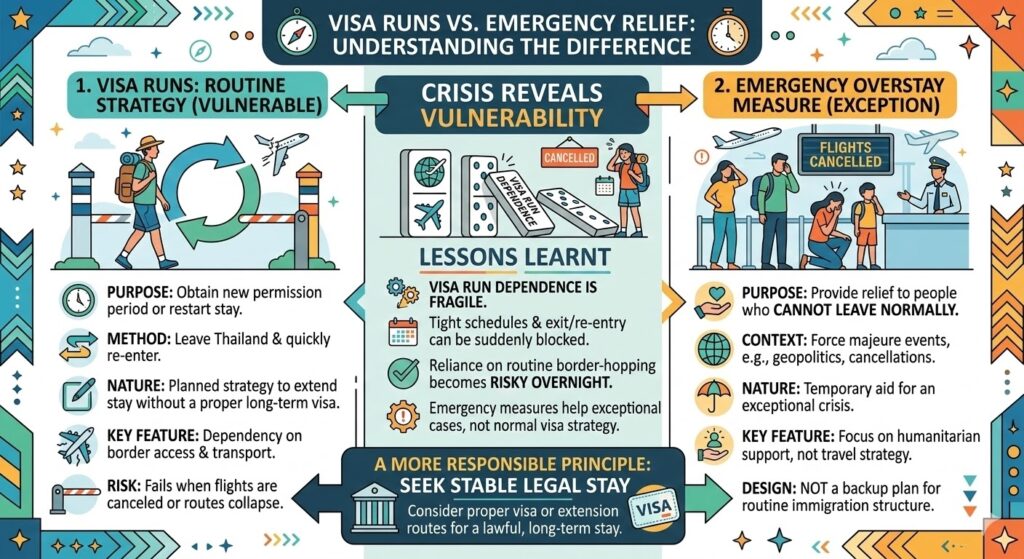
This crisis also highlights something important about visa runs. A visa run refers to leaving Thailand and re-entering in order to obtain a new permission period or restart a stay strategy. Whether done by land or air, the basic idea is that the person departs and comes back, often to prolong time in Thailand without moving to a more suitable long-term visa category.
The emergency overstay measure discussed here is not a visa run policy. In fact, it shows the opposite principle. Thailand is offering relief because some people cannot leave normally, not because it wants to facilitate border-hopping or repetitive stay-resetting. This distinction matters.
Here is the interesting connection: a crisis, such as this reveals how fragile visa-run dependence can be. Someone relying on a tight schedule, exit on one day, re-enter the next, or transit through a regional hub, may suddenly be trapped if flights are canceled or routes collapse. What looked, such as a simple immigration strategy can become risky overnight when geopolitics interrupts transport systems.
So one lesson from this situation is that travelers who depend on visa-run timing should understand the vulnerability of that approach. Emergency relief may help in exceptional cases, but it is not designed as a backup plan for routine immigration structuring.
In fact, this episode reinforces a more responsible principle: if a person needs to stay in Thailand longer in a stable and lawful way, they should consider the proper visa or extension route rather than depending too heavily on repeated exit-and-return patterns.
Final Thoughts
Thailand’s overstay response during the 2026 Middle East airspace crisis is a practical example of immigration flexibility under emergency conditions. The key takeaway is simple: Thailand did not erase overstay rules, but it created targeted relief for people genuinely stranded by war-related flight disruption.
The main benefit is for foreign travelers whose permission to stay expired because they could not leave Thailand after the crisis began on 28 February 2026. Those who are ready to depart may receive a waiver of the overstay fine. Those who need to remain temporarily may seek permission to stay for up to 30 days at a time, subject to documents and legal processing.
For travelers, the correct response is speed, honesty, and documentation. Save all airline evidence. Check your lawful stay date. Contact the relevant authorities. Prepare the forms. Get embassy support if possible. Do not assume the relief is automatic, unlimited, or suitable for unrelated cases.
And perhaps the most interesting immigration lesson is this: emergency relief is fundamentally different from a visa run. One is a humanitarian response to a crisis; the other is a deliberate travel pattern used to manage one’s stay. Confusing the two would be a mistake.
In uncertain times, the safest position is always the same: follow the rules closely, act early, and keep clear evidence showing that any delay was caused by circumstances beyond your control.
Thai Free Visa: Feel free to reach out to us anytime. We are here to help whenever you need.
Click to add LINE 💬

Call/WhatsApp/Telegram:
+66-92-387-0335
在微信上聊天

WeChat ID:
fasttrackvipth
References for “Thailand Overstay Fine Relief Measures During the Middle East Airspace Crisis”
[1] T. Lecca, “Russia’s effort to get US to drop aviation sanctions hits EU resistance,” 2025. [Online].
[2] A. Spray, “The Russian Airline That Lost 11 Of Its 13 Aircraft Due To Sanctions,” 2025. [Online].
[3] V. Duangdee and R. W. Yuniar, “Russian exodus puts Thailand’s tourism rebirth at risk as Asia longs for absent visitors,” 2022. [Online].
[4] Finnair, “Avoiding Russian airspace: From a shortcut to a detour,” 2022. [Online].
[5] Together Now, “Briefing note – Conflict in Sudan,” 2024. [Online].
[6] Department of Justice, Home Affairs and Migration, “Minister McEntee announces immediate lifting of visa requirements between Ukraine and Ireland,” 2022. [Online].
[7] J. Rose, “Tens of thousands of Ukrainians can stay in the U.S. without fear of deportation,” 2022. [Online].
[8] P. Wintour, “Hundreds queue for passports in bid to leave Afghanistan,” 2021. [Online].
[9] PR Thai Government, “Press Briefing on the Middle East Situation and Thailand’s Assistance to Affected Citizens,” 2026. [Online].
[10] Foreign Affairs Office of the Government Public Relations Department, “Financial Assistance for Foreign Tourists Stranded in Thailand by Airspace Closures,” 2026. [Online].
[11] MCOT News, “Middle East Conflict Disrupts Travel: Europe Flight Prices Double as Tourists Stranded in Thailand,” 2026. [Online].
1 thought on “Thailand Overstay Fine Relief Measures During the Middle East Airspace Crisis”
Comments are closed.