
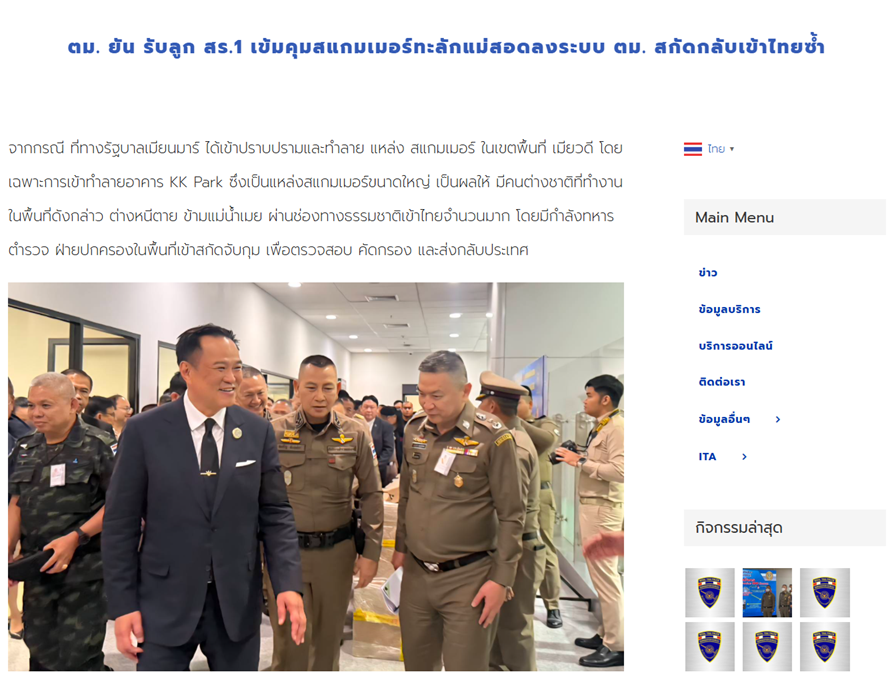
The Thai Immigration Bureau posted an article on its official website on 11 November 2025, stating that it is tightening security after Myanmar shut down scammer camps. More than 1,440 foreigners have entered Mae Sot. Officers are collecting biometric data, checking people through the NRM system, and instructing airports to refuse entry to anyone involved in these scam operations.
We are referring to this article, published in Thai, titled: “Immigration Bureau affirms it is following NSC directives, tightening controls to stop scammers flooding into Mae Sot and ensuring they are entered into the system to prevent re-entry into Thailand.” From our understanding, the news mainly focuses on these topics: influx of people entering from Myanmar / KK Park (25%), statistics and nationalities of people who entered illegally (20%), biometric data collection (20%), strict measures at airports (20%), NRM screening process (10%), and people with red notices / international warrants (5%).
So, what about us, the people who are still enjoying the beauty of Thailand on a free-visa stay, travelling in and out of the country as tourists or remote workers? The simple answer is: these new measures do not affect you.
They are not aimed at “real” visitors who follow Thai laws, the people who support the local economy, while simply enjoying spending time in this country. The stricter checks are mainly focused on foreigners escaping illegal scam camps in Myanmar, especially those linked to the well-known KK Park, and on people connected to organized crime, human-trafficking networks, or online fraud groups.
The Background
To understand the situation, it helps to know the background. After Myanmar started to close major scam centres near the border, especially around Myawaddy, many people crossed into Thailand through natural routes near Mae Sot. Many of them were from India, African countries, the Philippines, and China.
Some may be victims of trafficking, while others might have been involved in illegal operations. Thai authorities now need to identify each person’s background.
General Restriction on All Foreigners?
❌ No. This is not a general restriction on all foreigners. It is a targeted security action to stop criminal groups from moving into Thailand or trying to return after being removed. Because of this, Immigration officers in Mae Sot and airports across the country are now using stricter checks. These include taking biometric data and using the NRM (National Referral Mechanism) process to identify possible victims of trafficking. These systems help stop people from changing their identities in passports or travel documents and secretly re-entering Thailand.
Immigration has also told airports to refuse entry to anyone linked to scam networks, especially those who were deported before or are wanted under Interpol red notices or international warrants.
So, Where Do Normal Visitors Fit into All This?
If you come to Thailand as a tourist, a long-term traveller, or a digital nomad working remotely (not illegally in the Thai job market), you have nothing to worry about. These measures are not created to cause problems for you.
They are designed to protect the country from international crime groups that have harmed many innocent people around Asia, including foreigners forced into illegal work.
Thailand has always welcomed millions of visitors every year. The Government and the Immigration Bureau clearly understand how important tourism, lifestyle travellers, and remote workers are to the economy.
The free-visa program, visa exemptions, and long-stay options remain open for people who follow the rules. The people who will face closer checks are those whose travel patterns, documents, or past records show possible criminal activity, not those who simply love Thailand.
However, this does not mean Immigration will ignore people who misuse the free-visa system.
If someone enters Thailand many times without a clear tourism purpose, with no travel plan, no onward ticket, and no clear explanation of how they support themselves, and especially if there are signs of grey-area online work or unusual financial behaviour, officers may question them.
This is Normal in Many Countries.
Thailand also needs to protect its borders. But for most normal foreign visitors, including long-term travellers staying legally, these measures will not cause any concern. You go to cafés, beaches, coworking spaces, islands, temples, and mountain towns because you genuinely enjoy the country, spend money locally, and live calmly.
Thailand has always been friendly to people who come with good intentions.
So, if you are one of us, respectful travellers, curious explorers, or digital nomads who simply want to enjoy life while working online, you do not need to worry.
Immigration is not targeting you. Their focus is on a very specific group of people.
But for anyone who thinks they can misuse the free-visa policy to hide in Thailand and run scam operations, the situation is very different. The new biometric system, improved screening processes, and stricter airport checks mean these people will be caught. Thailand is strengthening its systems not to push away good visitors, but to protect the country’s safety and reputation.
In short: follow the rules, enjoy the country, and continue travelling with confidence.
Only those who come to do harm need to be worried, and they will not stay hidden for long.
Main Source:
Immigration Bureau. (2025). Immigration Bureau affirms it is following NSC directives, tightening controls to stop scammers flooding in through Mae Sot and ensuring they are entered into the system to prevent re-entry into Thailand [Thai]. Retrieved November 27, 2025, from https://www.immigration.go.th/?p=34094